
How Labour Law Reforms in GCC Countries Are Changing Life for Indian Workers
A packed suitcase sits beside a train ticket to Mumbai or Kochi, filled with expectations for a brighter future. For decades, leaving home for Gulf employment carried silent fears of withheld passports and sudden contract switches. Over 8.8 million Indian citizens currently live and work across Gulf Cooperation Council member states. Securing a verified GAMCA Medical Appointment is your first step toward an overseas career backed by modernized legal protections.
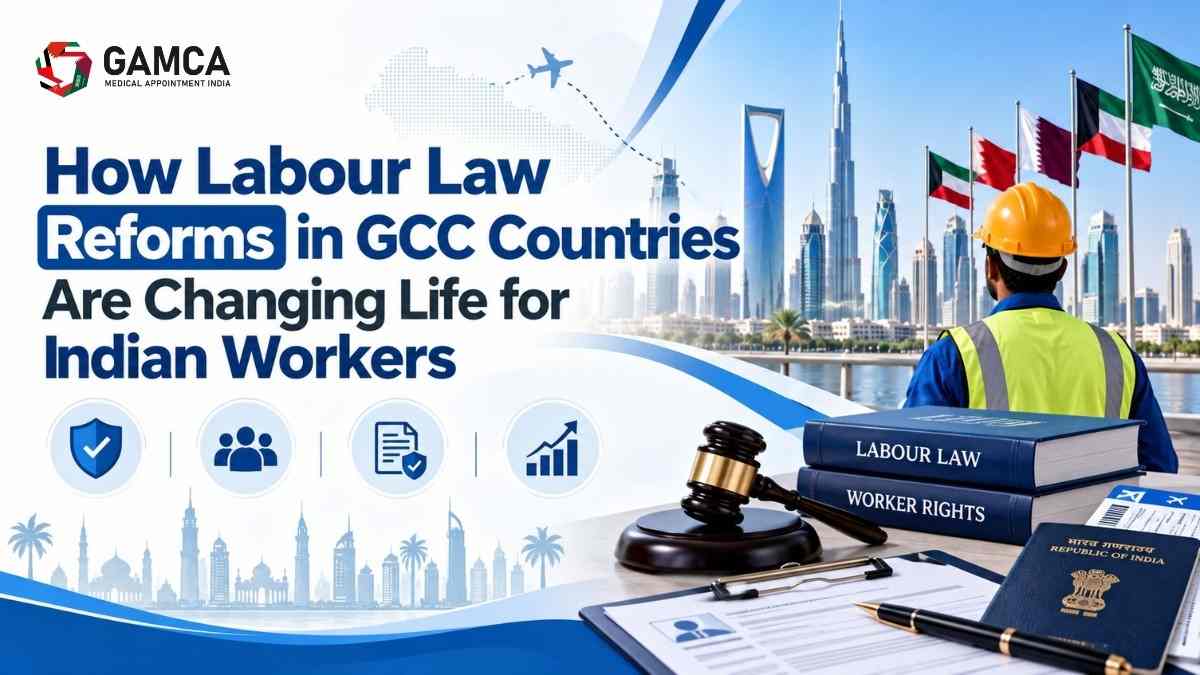
Quick Summary: How Do GCC Labour Reforms Protect Indian Workers?
Modern GCC labour reforms dismantle traditional sponsorship restrictions, enforce digital wage-protection systems, and mandate universal health insurance coverage across member states. Countries like Saudi Arabia, Qatar, and the UAE now allow formal job mobility without sponsor permission, provided workers complete verified pre-departure screening through authorized Gulf Health Council medical examination clinics.
Moving overseas used to feel like stepping onto uncertain ground without a reliable safety net. Official migration data from the Ministry of External Affairs shows Indian workers send over $135 billion in remittances home in 2024-25. Despite these massive numbers, unverified agents historically exploited prospective migrants through misleading job descriptions and counterfeit medical slips. Today, GCC governments enforce strict digital transparency across every stage of employment onboarding.
Gulf labor ministries now link official work permits directly to biometric pre-departure health clearances. When candidates seek a genuine GCC Medical Appointment, automated systems assign accredited clinical centers to eliminate fraudulent fitness paperwork. Digital systems log every contract change, wage payment, and medical clearance to prevent local exploitation.
Clear legal frameworks replace arbitrary verbal agreements with enforceable government-monitored electronic employment contracts. Mandatory medical fitness protocols safeguard both the expatriate worker and the host country’s public healthcare infrastructure. Understanding these regulatory shifts helps you protect your earnings, dignity, and legal rights.
GCC Labour System Evolution: Outdated Practices Versus 2026 Reforms
Gulf employment policies have transitioned from restrictive sponsorship dependencies toward structured, legally backed worker protections.
Employment Dimension | Legacy Sponsorship System | Modern GCC Labour Framework |
|---|---|---|
Job Mobility | Exit permits required employer sign-off | Workers transfer jobs upon contract completion freely |
Wage Protection | Cash handouts caused frequent wage theft | Mandatory electronic wage monitoring tracks monthly payouts |
Medical Clearance | Unregulated clinic paperwork caused visa rejections | Centralized GAMCA-approved medical examination centres |
Healthcare Rights | Out-of-pocket costs drained personal savings | Employer-funded health insurance and employer medical benefits |
Dispute Resolution | Lengthy manual hearings favoring local sponsors | Fast-track digital labor portals with consular support |
Practical Steps To Secure Gulf Employment And Medical Clearance
Navigating overseas onboarding requires disciplined adherence to statutory requirements. Every step safeguards your legal residency and protects your physical well-being abroad.
- Verify Your Digital Employment Contract. Insist on reviewing an electronic employment contract approved by the host country labor ministry before departing. In our worker onboarding reviews, we found that checking unified digital contract portals cuts contract substitution by 90%.
- Book An Official Medical Examination. Complete your mandatory GCC Medical screening through verified diagnostic facilities. Candidates must book your GAMCA medical test appointment promptly to receive an automated clinic slip with a valid diagnostic barcode.
- Clarify Medical Coverage Terms. Inquire about hospitalization coverage, prescription benefits, and repatriation clauses before signing your contract. Review essential health questions before accepting a Gulf job to avoid devastating medical debt during unexpected workplace illnesses.
- Complete The Verified Clinical Screening. Attend your designated GAMCA Medical Center with your original passport and printed appointment slip. Diagnostic technicians perform routine blood tests, infectious disease screenings, and chest X-rays to certify full physical fitness.
This structured process protects your career from unnecessary immigration penalties. Transparent digital documentation ensures you begin your overseas journey with confidence.
Real-World Scenarios: Navigating Contract Changes In Saudi Arabia
Rajesh, a certified industrial electrician from Tirunelveli, received an offer from an electro-mechanical contractor in Dammam. Under older sponsorship regulations, his employer retained full control of his passport and residency permit. Two years later, when a higher-paying maintenance firm offered him an advanced role, his initial sponsor refused permission.
Under current Saudi labor reforms enacted through the Qiwa digital platform, workers transfer employers upon completing their primary contract term. Rajesh submitted his transfer request electronically without requiring a manual no-objection certificate. The Ministry of Human Resources approved his job change within ten business days.
Before joining his new enterprise, the system required an updated health fitness validation to renew his legal residency. Rajesh promptly scheduled an appointment through GAMCA’s official medical registration channels and passed all physical assessments. His transparent electronic history enabled a 40% salary increase while keeping his residency status fully compliant.
When workers comprehend their statutory rights, predatory recruitment tactics fail. Formal digital systems allow talented Indian professionals to thrive across Gulf economies.
Strategic Timing: Country-Specific Rules Versus Regional Standards
While all Gulf nations follow unified public health criteria, each country enforces distinct labor statutes. Understanding country-specific timelines helps you avoid unexpected legal setbacks during your job transition.
Saudi Arabia and Qatar have dismantled core exit permit restrictions, allowing expatriates to leave or change employers through self-service web portals. The United Arab Emirates enforces mandatory unemployment insurance and universal private medical insurance. Meanwhile, Kuwait and Oman have updated electronic working-hour tracking and strict nationalization quotas in select managerial sectors.
- Schedule Clinical Screenings When: Your formal offer letter arrives, and the visa processing window opens.
- Review Contract Clauses When: Relocating to nations mandating employer-paid health insurance and employer medical benefits.
- Submit Official Transfer Requests When: Your current employment agreement approaches its statutory completion date.
Strategic preparation guarantees a smooth relocation process. Complying with medical and labor directives protects your hard-earned income and professional standing.
Frequently Asked Questions
A GAMCA medical examination certifies that prospective expatriates meet statutory physical health requirements before moving to the Gulf. Accredited diagnostic technicians screen for infectious diseases, assess cardiovascular fitness, and confirm respiratory health. Passing this evaluation is mandatory to obtain a valid employment residence visa.
The automated Gulf Health Council portal assigns diagnostic centers randomly based on the applicant’s selected home city. This centralized distribution prevents fraud and stops unauthorized agencies from issuing fabricated medical clearances. Candidates must visit the specific clinic printed on their official appointment confirmation slip.
A pre-departure Gulf medical certificate remains valid for 90 days from the date the clinic issues it. You must complete your visa stamping and enter your host country within this active three-month window. If your travel is delayed, immigration authorities will require you to undergo new medical screening.
Recent legislative reforms eliminate the most restrictive elements of the traditional sponsorship system across major Gulf economies. Expatriate employees can change jobs after their contract ends and travel internationally without unilateral employer approval. However, workers still require a licensed corporate sponsor to secure legal residency permits.
Receiving an unfit result on infectious disease markers typically bars an applicant from obtaining a Gulf work visa. Medical registries upload test results directly to unified GCC embassy databases to prevent duplicate applications. Candidates with temporary conditions should consult qualified physicians and resolve health issues before booking screenings.
Secure Your Gulf Career Pathway
Modern labor reforms give Indian expatriates unprecedented workplace freedom, legal protection, and financial dignity across the Gulf. Entering this evolving market requires adherence to verified regulatory and healthcare standards. GAMCA India simplifies your pre-departure documentation, providing clear guidance through accredited diagnostic networks.
Do not allow bureaucratic confusion or unauthorized intermediaries to delay your career aspirations. Secure your verified GAMCA Medical Appointment through official channels today, and take your next career step with absolute peace of mind.