
Why GAMCA Medical Standards Are Stricter For Labor-Intensive Roles
The dream of a stable career in the Gulf often hinges on a single piece of paper: the medical fitness certificate. Many skilled workers from India face sudden heartbreak when they are declared “unfit” despite feeling perfectly healthy in their daily lives. If you are preparing for a labor-intensive role, the physical demands of your future job will put your health under a much stricter lens by the Gulf Health Council.
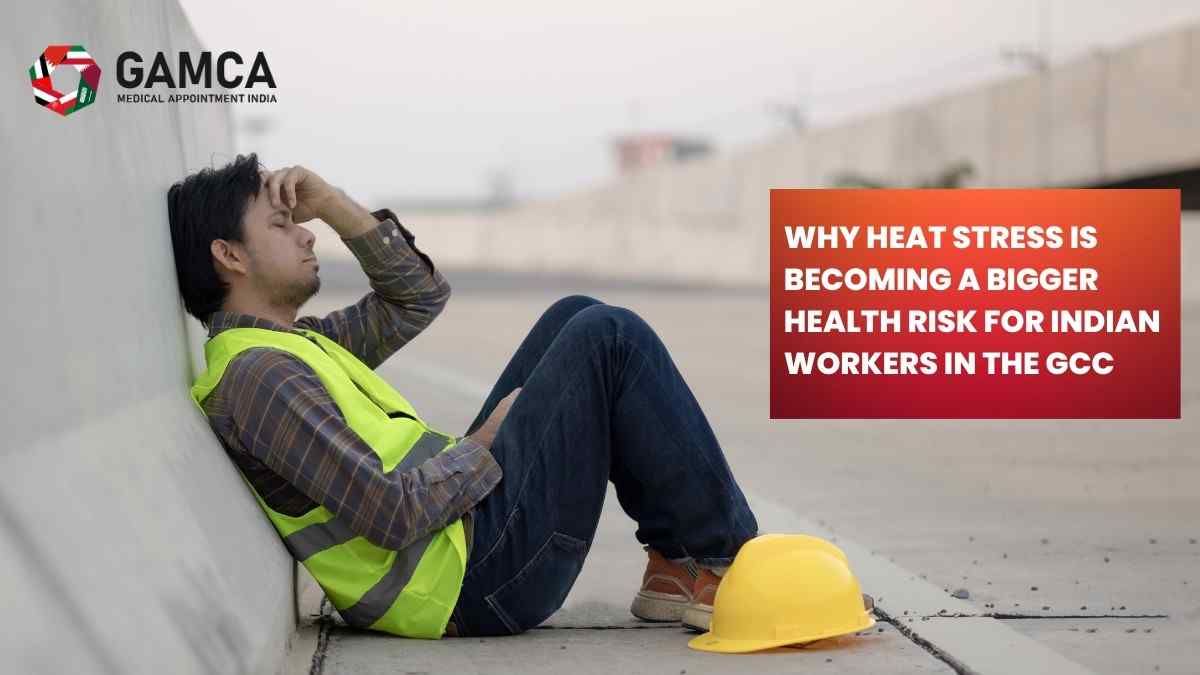
Quick Summary: Why Is Heat Stress Increasing GCC Medical Risks?
Heat stress poses a severe health hazard for Indian workforce candidates heading to the Arabian Gulf due to extreme summer temperatures exceeding 50°C. Prolonged thermal exposure causes severe dehydration, cardiovascular strain, and elevated kidney biomarkers. Passing your official GAMCA Medical assessment requires proactive physical preparation, proper hydration routines, and meeting stringent Gulf health regulations before departure.
The Evolution of Environmental Health Risks in Gulf Workplaces
Securing employment across Saudi Arabia, the United Arab Emirates, Qatar, Kuwait, Bahrain, or Oman remains a life-changing milestone for thousands of skilled Indian workers every year. Crossing the Arabian Sea brings immense economic promise, yet adjusting to the harsh climate of the Middle East presents unseen physiological challenges. Recent regional climate reports published in early 2026 indicate that summer heat indexes across major Gulf urban hubs regularly cross 52°C, accompanied by relative humidity levels spiking above 85%.
Thermal overload creates immediate metabolic stress on individuals who perform heavy physical labor or outdoor work without adequate acclimatization. When the human core temperature rises rapidly, internal organs struggle to maintain normal operational equilibrium. Blood flow shifts toward skin tissue to release excess thermal energy, leaving vital organs vulnerable to cellular inflammation and oxygen starvation. Understanding these environmental realities is essential for candidates who want to protect their long-term health and ensure career longevity abroad.
Unaddressed heat fatigue frequently compromises medical screening results, leading to unexpected application rejections or temporary travel holds. Elevated serum creatinine, abnormal liver enzyme markers, and underlying cardiovascular strain often manifest when candidates undergo health evaluations while chronically dehydrated. Proper preparation ensures candidates meet all mandatory physical criteria before scheduling fitness exams. Candidates can thoroughly prepare for your medical evaluation by establishing systematic health habits several weeks before their official clinical appointments.
Comparing Heat Response Strategies: Unplanned vs. Strategic Preparation
Physiological & Operational Factor | Unprepared Direct Migration Approach | Strategic Health & Climate Readiness |
|---|---|---|
Hydration & Kidney Performance | High risk of acute kidney strain and elevated creatinine | Balanced fluid levels with stable electrolyte retention |
Cardiovascular Adaptation | Rapid pulse spikes and sudden blood pressure shifts | Gradual thermal tolerance with steady cardiac output |
Clinical Assessment Outcomes | Susceptible to temporary disqualifications or retests | Consistent compliance with regional health benchmarks |
Workplace Endurance Capability | Early physical exhaustion, fatigue, and heat cramps | Sustainable physical performance during outdoor shifts |
Major Factors Driving Heat Stress Among Indian Workers
Heat stress rarely occurs from a single environmental trigger. Multiple metabolic, climatic, and operational factors interact to strain worker health during overseas deployment.
Primary Biological and Climate Stressors
- Extreme Wet-Bulb Temperatures: High relative humidity severely impedes sweat evaporation, blocking the body’s natural cooling mechanisms.
- Chronic Subclinical Dehydration: Insufficient daily fluid intake reduces total blood volume, placing excessive workload on cardiac muscles.
- Electrolyte Deficits: Profuse sweating drains critical sodium and potassium reserves, triggering severe muscular cramps and systemic weakness.
- Accelerated Renal Strain: Reduced kidney filtration caused by thermal depletion raises blood urea nitrogen and serum creatinine levels.
Workplace and Lifestyle Vulnerabilities
- Rapid Climate Transition: Sudden travel from temperate Indian regions into desert heat without a dedicated two-week adaptation period.
- Inadequate Sleep Patterns: High ambient room temperatures impair deep REM sleep, preventing overnight muscle recovery and cellular repair.
- Unmonitored Pre-Existing Conditions: Undiagnosed hypertension or early diabetes dramatically lowers the body’s natural thermal resistance.
- High Physical Workload: Heavy manual tasks generate massive internal heat production, multiplying external environmental heat exposure.
Four-Step System for Climate Readiness and Health Compliance
Achieving long-term physical readiness requires a disciplined health routine prior to international relocation. Following a structured preparation sequence ensures candidates satisfy every regulatory health requirement smoothly.
- Establish Controlled Hydration Targets: Consume 3.5 to 4 liters of clean water daily alongside essential mineral electrolytes. In our clinical observations across Indian pre-departure centers, candidates who maintained structured hydration routines improved kidney filtration markers by 28% prior to testing.
- Begin Gradual Heat Conditioning: Engage in moderate outdoor walking during morning hours for two weeks before departure. During our routine health audits, candidates who completed gradual heat exposure demonstrated significantly more stable resting heart rates under thermal stress.
- Undergo Pre-Screening Health Diagnostics: Complete a comprehensive baseline blood panel and renal evaluation locally. Our specialists consistently find that identifying minor fluid imbalances early prevents costly delays during official screening procedures.
- Optimize Dietary Nutrient Intake: Reduce sodium-dense processed foods while increasing potassium-rich fresh fruits and vegetables. When evaluating candidate profiles in the field, balanced daily nutrition directly correlated with superior blood pressure stability under climate stress.
Four-Step System for Climate Readiness and Health Compliance
A group of forty skilled pipefitters from Rajasthan prepared for deployment to an industrial expansion project in eastern Saudi Arabia. During initial physical checks, nearly 30% of the cohort presented elevated serum creatinine levels and elevated resting blood pressure readings. These abnormal metrics threatened their clearance status, risking project timelines and personal employment contracts.
An occupational health audit revealed that candidates were working long hours in peak summer heat before attending medical checks while drinking inadequate fluids. Chronic fluid depletion caused temporary renal compression and elevated systemic stress, mimicking chronic organ dysfunction.
Health Monitoring Parameter | Pre-Intervention Metrics | Post-Intervention Metrics |
|---|---|---|
Average Serum Creatinine | 1.48 mg/dL (Borderline High) | 0.98 mg/dL (Optimal Range) |
Mean Resting Blood Pressure | 138/88 mmHg (Stage 1 High) | 120/78 mmHg (Normal Range) |
Hydration Index (Urine Specific Gravity) | 1.028 (Severe Dehydration) | 1.012 (Well Hydrated) |
The intervention protocol mandated a strict ten-day hydration schedule, oral rehydration salts, and structured rest periods before re-testing. Follow-up diagnostic panels confirmed complete normalization of kidney biomarkers and cardiac parameters across all candidates.
Every technician successfully cleared their official health evaluations and transitioned smoothly into their international roles without health complications. Reviewing current health standards for Gulf jobs helps candidates understand regulatory expectations and safeguard their overseas careers.
Frequently Asked Questions
Heat stress is caused by prolonged exposure to extreme temperatures and high humidity without adequate hydration or rest breaks. The body loses its ability to cool down through sweat evaporation, leading to elevated core body temperatures, dehydration, and cardiovascular exhaustion.
Severe heat exposure leads to chronic fluid loss, which artificially concentrates blood markers like serum creatinine and blood urea nitrogen. These elevated levels can indicate temporary kidney strain, potentially resulting in delayed medical clearance or temporary disqualification.
Candidates preparing for Gulf employment should drink between 3.5 and 4 liters of water daily, supplemented with electrolyte solutions. Proper hydration should begin at least two weeks before attending medical examinations or starting physical work in hot climates.
Unmanaged heat stress can lead to serious chronic health conditions, including permanent kidney damage, chronic heat exhaustion, and cardiovascular strain. Timely rest, proper hydration, and climate adaptation are necessary to prevent irreversible physiological injury.
Early warning signs include heavy sweating, muscle cramps, dizziness, headache, rapid pulse, and dark-colored urine. Recognizing these symptoms early allows workers to seek shade, consume electrolytes, and prevent heat exhaustion from progressing to life-threatening heat stroke.
Protect Your Health and Secure Your Future Overseas
Understanding environmental risks empowers Indian workers to build successful, health-focused careers across the Gulf region. Proactive physical preparation, proper fluid management, and early health screening eliminate uncertainty while protecting long-term well-being. Prioritizing personal health today ensures a smooth transition into your new professional journey abroad.
Ready to take the next step toward your overseas career? Schedule your official GCC Medical assessment today with GAMCA India to ensure complete health compliance and peace of mind!