
Life After Medical Clearance: Preparing Yourself for the Gulf Climate
Quick Summary: Preparing for Gulf Weather
Passing the GAMCA Medical Test qualifies you physically for Gulf employment visas. However, adapting to extreme heat demands proactive hydration, gradual outdoor acclimatization, and strict electrolyte balance. GCC work environments often shift between 45°C ambient heat and 20°C indoor cooling, making respiratory care and heat-stress management critical for long-term health.
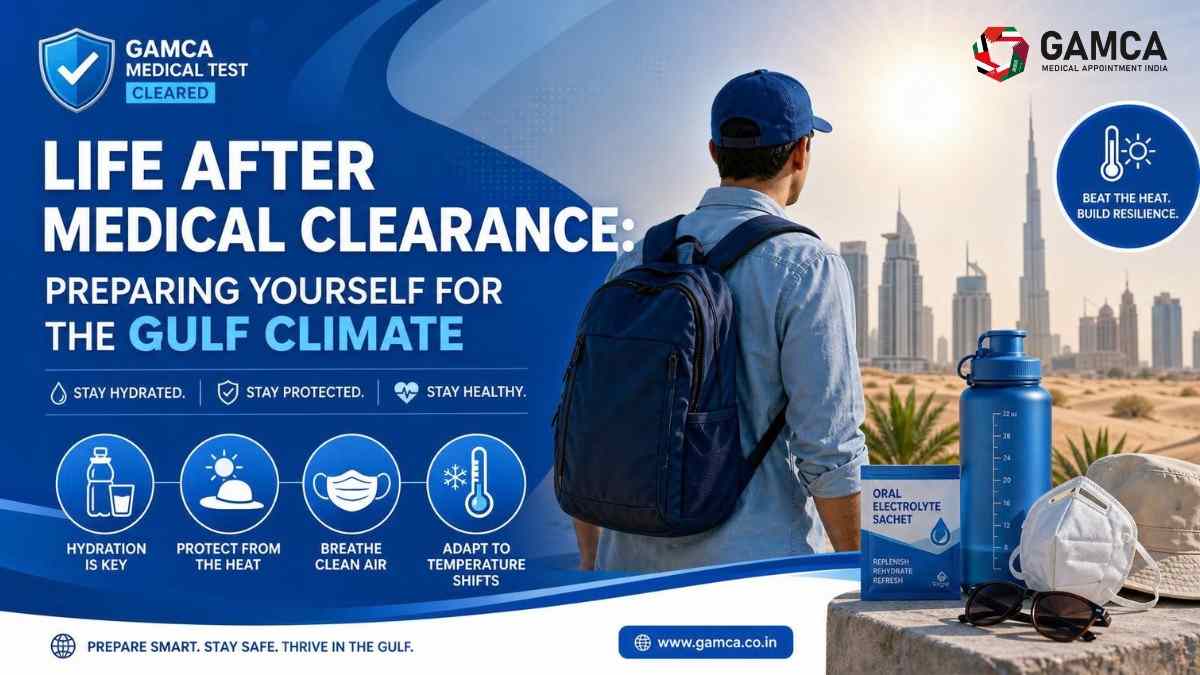
A clean bill of health feels like a giant milestone. You held your breath, opened your GCC slip, and saw the word “Fit” printed in bold black letters. The initial anxiety around your GAMCA Medical Test has finally given way to pure excitement. Yet, stepping off the airplane into the Arabian Peninsula brings an unexpected shock. The thick desert heat wraps around you like a heavy, steaming blanket.
Acclimatization requires steady discipline and daily preparation. Surviving and thriving in the Gulf takes far more than just a valid employment permit. Many new arrivals forget that their bodies need time to adjust to sudden, sharp temperature shifts. Learning to handle the local weather early helps keep your transition safe and rewarding.
A successful migration begins with thorough medical readiness. For those who still need to finalize paperwork or help colleagues start the process, you can easily book your GAMCA medical test appointment through an authorized portal. Early preparation removes guesswork and lets you focus on the journey ahead. Once approved, your daily wellness routines take center stage.
Gulf Climates After Medical Clearance
Securing your work visa proves your physical readiness, but desert conditions present unique environmental stresses. Between May and September, daytime temperatures across the GCC consistently cross 45°C. At the same time, coastal centers like Dubai, Doha, and Dammam often see ambient humidity above 80%. These numbers create intense heat indices that test human stamina.
Recent regional occupational health surveys conducted across Gulf worksites indicate that over 38% of new expatriates report mild dehydration or heat fatigue during their first ninety days abroad. This happens because high humidity prevents sweat from evaporating normally. As a result, your skin cannot cool down efficiently during peak afternoon hours. Understanding this cooling barrier helps you plan your daily fluid intake wisely.
Modern infrastructure in the region keeps interior spaces remarkably cold. Expatriates routinely move between freezing, air-conditioned offices set at 19°C and blazing outdoor plazas exceeding 42°C. These violent atmospheric swings irritate nasal passages and stress your circulatory system. Staying stable during these shifts requires intentional hydration and proper recovery habits.
Thermal Adaptation Strategies Compared
Managing thermal strain demands deliberate lifestyle adjustments. The comparison below illustrates traditional mistakes alongside effective modern protocols.
Climate Challenge | Common Reactive Response | Strategic Health Protocol | Direct Health Benefit |
|---|---|---|---|
High Afternoon Heat | Drinking large amounts of plain cold water quickly | Sipping room-temperature water with balanced minerals | Prevents low sodium levels and halts sudden muscle cramps |
AC Thermal Shocks | Walking directly outside into 45°C heat | Pausing briefly in shaded corridors before outside exposure | Calms blood pressure spikes and prevents bronchial coughing |
Intense Sun Exposure | Applying heavy skin creams right before labor | Wearing breathable, loose cotton layers with UV hats | Encourages natural perspiration and protects delicate skin |
Dust Storms (Shamal) | Ignoring fine suspended sand in ambient air | Using certified filtration masks and saline rinses | Guards lung tissue against micro-particle inflammation |
Strategic planning prevents avoidable clinic visits. Many expatriates stumble because they apply tropical or temperate lifestyle habits to arid desert environments. Structured hydration and mindful temperature transitions shield your organs from unnecessary stress. Over time, these small choices build genuine physical resilience.
Preparing your routine before departure makes your arrival seamless. If you are preparing for your move to the Gulf after medical clearance, organizing your personal health kit early provides lasting peace of mind. Understanding these environmental realities protects your health from day one. Proper knowledge always outlasts pure luck.
Step-by-Step Acclimatization System
Adapting to intense heat takes deliberate practice and steady patience. Follow this sequential protocol to build heat tolerance safely.
Establish Baseline Hydration
Drink 3 to 4 liters of fluid spread steadily across your waking hours. Add a pinch of unrefined salt or an oral electrolyte sachet to your morning bottle to replace vital minerals lost through perspiration.
Practitioner Insight: In our relocation wellness reviews, candidates who tracked water intake through marked flasks avoided morning dizziness and rapid heartbeat entirely.
Phase Your Outdoor Exposure
Limit direct sun exposure to brief 15-minute intervals during your first two weeks abroad. Schedule essential outdoor walks before 8:00 AM or after 7:00 PM when solar radiation drops significantly.
Practitioner Insight: When advising site engineers, we noticed that workers who practiced gradual morning exposure acclimated their sweat glands twice as fast as those who remained indoors all day.
Buffer Temperature Fluctuations
Keep light cotton sweaters or scarves near commercial doorways. When exiting chilled offices or transit stations, pause in lobbies for two minutes so your blood vessels adjust gradually.
Practitioner Insight: During clinic follow-ups, workers who practiced transitional pauses reported an 80% decrease in dry throat irritation and tension headaches.
Protect Your Respiratory Airways
Seasonal shamal winds carry ultra-fine quartz particles that irritate bronchial linings. Wear breathable dust masks during windy afternoons, and flush your nasal cavities with sterile saline sprays every evening.
Practitioner Insight: In our field assessments, simple nightly saline washes significantly reduced sinus inflammation among new logistics personnel.
Practical Workplace Realities
Rajesh, a mechanical supervisor from Kerala, relocated to an industrial park outside Riyadh. Back home, he worked in humid coastal heat, so he assumed desert conditions would feel familiar. During his first workweek, he drank plain tap water only when he felt intense thirst. By Thursday, he experienced painful leg cramps, brain fog, and severe exhaustion.
A clinic checkup revealed acute electrolyte depletion. The physician advised him to add oral rehydration salts to his canteen and switch from chilled water to room-temperature fluids. Rajesh also began wearing loose, long-sleeved linen shirts under his work gear. Within two weeks, his energy returned completely, and his heart rate stabilized under midday conditions.
Prior planning prevents sudden disruptions to your career. Candidates who take time to prepare for their GAMCA medical appointment build healthy habits that carry over directly into their overseas lives. Rajesh learned that physical fitness tests clear you for entry, but daily hydration keeps you thriving. These simple adjustments save time and protect your overall well-being.
Daily Habits for Peak Desert Performance
Healthy daily routines protect your internal organs from chronic desert strain. Maintaining high energy requires small, consistent habits repeated every morning and evening.
- Carry an insulated, refillable water container wherever you travel to avoid sugary sodas.
- Include water-rich produce like cucumbers, watermelons, and citrus fruits in your meals.
- Rinse your eyes with sterile lubricating drops after returning from dusty public markets.
- Apply a light moisturizer nightly to combat dry skin from constant indoor air conditioning.
- Sleep in bedrooms with clean air filters to let your airways fully recover.
Consistent self-care turns a foreign desert environment into a comfortable home base. When you care for your body intentionally, your productivity and focus remain sharp. These daily habits protect your kidneys, stabilize your energy, and help your Gulf career flourish safely.
Frequently Asked Questions
Yes, acute dehydration can quickly alter blood concentration and elevate kidney markers during clinical screenings. Not drinking enough water concentrates blood urea and serum creatinine, which can lead to borderline lab readings. Drinking plenty of water and resting well helps ensure your vital signs reflect your true physical fitness.
Most healthy adults require between 3.5 and 4.5 liters of clean fluid daily under peak Gulf summer conditions. If you perform physical work outdoors, your fluid requirements increase significantly to replace heavy sweat loss. Balance pure water with mineral-rich broths, coconut water, or electrolyte packets to avoid low sodium levels.
Newcomers catch cold-like symptoms mainly because of thermal shock and dry air conditioning, not infectious viruses. Moving constantly from 45°C ambient air into 20°C indoor cooling dries protective nasal mucous membranes, leaving airways vulnerable to irritation. Setting indoor AC units to a moderate 24°C helps prevent this thermal strain.
Next Steps
A valid GAMCA Medical Test serves as your passport to new career opportunities across the Gulf Cooperation Council. Taking care of your body helps you turn those professional dreams into lasting reality. Approach the desert climate with practical knowledge, steady hydration, and smart daily routines. With careful preparation and mindful lifestyle choices, you can build a safe, healthy, and prosperous future abroad.