
What Every First-Time Gulf Worker Should Know About Occupational Health
Quick Summary: Why Does Occupational Health Matter For First-Time Gulf Workers?
Passing your mandatory pre-departure screening verifies that you are free from specific infectious diseases and major physiological conditions. True occupational health encompasses long-term physical endurance, heat adaptation, ergonomic protection, and stamina tailored to your daily job duties. A standard pre-employment check verifies baseline medical admissibility under regional immigration mandates, while holistic occupational wellness protects your income, safety, and physical longevity abroad.
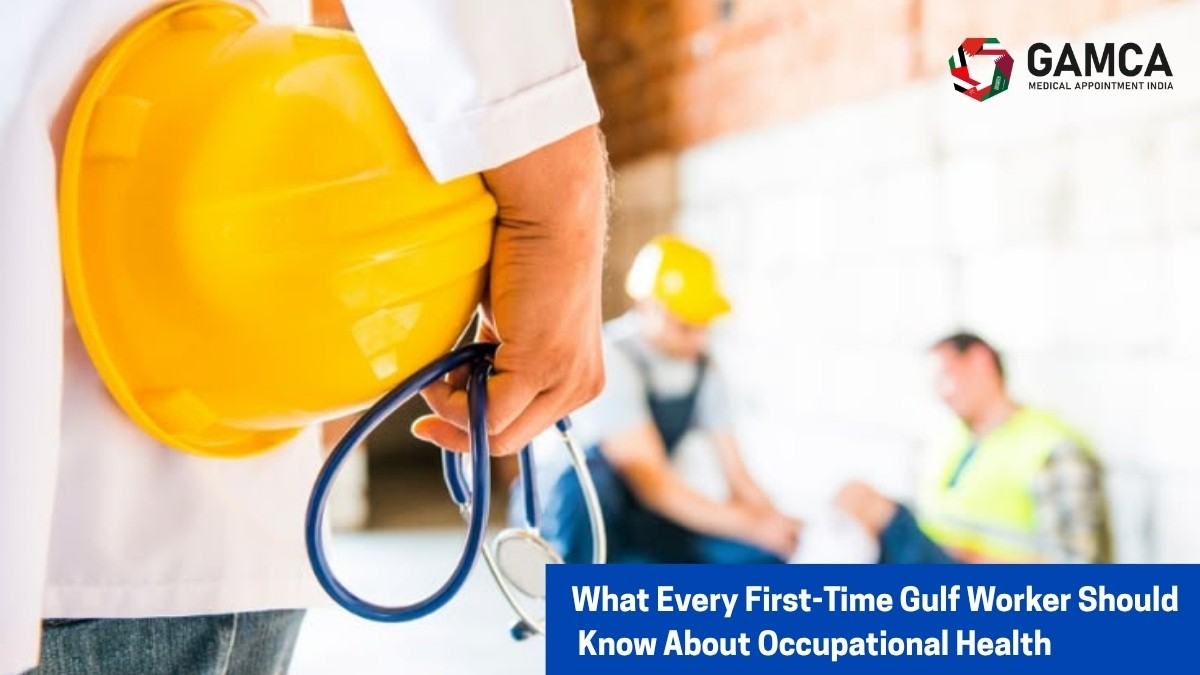
Your overseas journey represents a life-changing milestone for you and your family. Securing an overseas job offer brings immense pride, but preparing for deployment requires careful attention to your physical readiness. Most first-time candidates focus entirely on visa approvals and travel itineraries, overlooking the daily physical demands of their new work environments.
The first step begins when you book your GAMCA medical test appointment to meet essential statutory requirements. However, passing this entry examination is only the baseline foundation of your journey. Sustaining your career across the Gulf Cooperation Council (GCC) demands a broader, practical understanding of workplace health.
The Reality Of Gulf Workplaces: Beyond The Routine Screening
Working in the Gulf states exposes your body to unique operational stressors that standard clinic tests cannot simulate. Extreme ambient heat, prolonged rotational shifts, and specialized equipment create specific physical demands across construction sites, industrial plants, and logistics hubs. Data from GCC labor and occupational safety reports published in 2026 indicate that environmental heat strain and sudden shift-pattern changes account for over 42 percent of initial health clinic visits among newly deployed expatriate workers.
Pre-employment medical screenings exist strictly to check baseline medical admissibility, identify communicable illnesses, and verify vital organ function. These evaluations do not measure how your cardiovascular system handles twelve-hour shifts under severe daytime temperatures. Recognizing this distinction helps you avoid physical exhaustion and prevents early repatriation during your probationary employment period.
Industrial sectors in Saudi Arabia, the United Arab Emirates, Qatar, and Oman operate under rigorous environmental standards to safeguard human capital. Understanding your job description helps you build personal endurance before you leave. Taking responsibility for your health builds professional resilience and safeguards your earning potential from day one.
Strategic Comparison: Entry Screening Versus True Workplace Health
Understanding how entry-level compliance differs from daily operational stamina protects your health and professional standing. Review the comparison below to understand these critical distinctions:
Evaluation Factor | Pre-Departure Baseline Screening | Sustained Occupational Health Practice |
|---|---|---|
Primary Objective | Satisfies administrative and statutory GCC immigration requirements. | Sustains physical capability, safety, and wage continuity. |
Scope of Testing | Screens for infectious diseases, blood markers, vision, and organ metrics. | Monitors heat tolerance, physical stamina, joint integrity, and stress. |
Evaluation Frequency | Conducted once before visa stamping and upon renewal cycles. | Managed through daily habits, employer safety protocols, and hydration. |
Workplace Impact | Confirms initial statutory fitness to enter the host country. | Prevents work-induced fatigue, physical injuries, and early resignations. |
Personal Ownership | Supervised entirely by accredited diagnostic medical centers. | Driven by self-awareness, nutrition, ergonomic practices, and proper rest. |
Occupational Health Demands Across Core Overseas Industries
Every job sector creates unique physical challenges that require deliberate physical preparation. Construction workers face high radiant heat, repetitive lifting, and sustained standing on industrial scaffolding. Specialized technical personnel must meet GAMCA medical standards for labor-intensive roles to ensure their physical capacity matches rigorous daily site operations.
Factory technicians, warehouse selectors, and plant operatives face prolonged indoor heat, vibration, and posture-related physical strain. Maintaining muscle integrity through balanced core strength prevents chronic lumbar injuries during strenuous warehousing assignments. Recognizing muscle fatigue early lets you correct lifting posture before minor strains become debilitating conditions.
High-elevation workers, offshore crew members, and heavy equipment mechanics shoulder additional environmental and chemical risks. Candidates entering these technical fields must maintain GAMCA medical fitness for high-risk jobs because unmanaged medical conditions can create serious safety hazards in isolated offshore or industrial environments. Consistent physical conditioning and strict adherence to personal protective equipment protocols ensure reliable career longevity.
A Four-Step System For Preparing Your Body For Overseas Employment
Conduct Early Personal Health Audits: Visit your family physician six weeks before formal testing to review blood pressure, blood glucose, and baseline liver function. Addressing minor anomalies through simple dietary adjustments can prevent administrative delays during your formal evaluation. Practitioner Insight: In our cross-border workforce placement workflows, we observe that early lifestyle adjustments resolve more than eighty percent of borderline metabolic readings.
- Build Environmental Heat Tolerance: Begin acclimatizing your cardiovascular system thirty days prior to departure through progressive outdoor aerobic exercise. Maintain consistent hydration habits by consuming electrolytes alongside clean drinking water to support kidney function.
Practitioner Insight: Candidates who practice structured daily hydration adapt to Gulf environmental heat conditions within two weeks of deployment.
- Condition Your Musculoskeletal System: Prepare your body for trade-specific physical tasks through daily core stabilization, hamstring mobility, and back strengthening routines. Proper lifting mechanics protect your spinal discs when handling tools, piping, or freight.
Practitioner Insight: Industrial site audits reveal that workers who master ergonomic mechanics reduce early musculoskeletal complaints by nearly sixty percent.
- Establish Consistent Sleep Hygiene: Shift work disrupts natural circadian rhythms, increasing systemic stress and weakening immune defenses. Train your body to rest deeply in quiet, darkened rooms to prepare for variable camp living arrangements.
Practitioner Insight: Workers who establish regular sleep habits adapt rapidly to rotational shifts and experience fewer daytime focus lapses.
Real-World Case Studies From The Field
The Preventive Health Victory
Suresh, a certified commercial pipefitter from Kerala, secured a three-year contract for an industrial natural gas project in Jubail. Instead of waiting for official clearances, he reviewed his medical profile early and discovered borderline pre-hypertension caused by excessive sodium intake. He reduced his processed food intake, added thirty minutes of brisk walking daily, and stabilized his blood pressure within three weeks. As a result, his official clearance proceeded without delay, and his physical stamina allowed him to complete his probationary period without heat-related fatigue.
Addressing Underlying Joint Strain
Manoj, an experienced heavy excavator operator from Punjab, passed his preliminary health screening without difficulty. However, he ignored a recurring lower back ache from years of prolonged seat vibration. After arriving at an infrastructure site in Abu Dhabi, long operating shifts intensified his sciatic discomfort, threatening his probationary assessment. Working closely with his on-site safety officer, Manoj implemented daily lumbar decompression stretches and utilized ergonomic seating supports, resolving the issue and preserving his placement.
Frequently Asked Questions
No, the pre-departure test confirms only that you meet specific regulatory immigration standards and are free from defined communicable diseases and acute organ pathologies. It does not measure physical stamina, spinal endurance, or heat tolerance required for strenuous jobs. Long-term workplace performance requires proactive physical conditioning tailored to your trade duties.
High ambient temperatures and radiant sunlight cause rapid fluid loss, electrolyte depletion, and elevated cardiovascular strain. Without disciplined water and salt replenishment, workers risk experiencing heat exhaustion, muscle cramps, and dangerous lapses in concentration. Acclimatizing early and drinking fluids regularly keeps your energy levels stable.
Report your fatigue to your company clinic or on-site welfare officer promptly to evaluate your hydration status, electrolyte levels, and sleep habits. Adjusting your water intake, eating balanced meals, and getting proper rest between shifts can resolve mild fatigue. Seeking early guidance prevents minor exhaustion from developing into severe heat illness.
Gulf Health Council member states establish unified medical directives, but individual states implement specific regulatory criteria based on their public health strategies and local environmental risks. Certain roles may require additional diagnostic screenings depending on regional workplace safety codes and industry-specific hazards. Checking state guidelines ensures your medical documentation remains fully compliant.
Spending five to ten minutes each morning warming up major muscle groups, hamstrings, and shoulders prepares your body for demanding physical labor. Also, lift heavy loads with your legs rather than bending your lower back to prevent lumbar injuries. Practicing proper posture throughout your shift keeps your joints healthy and your muscles strong.
Securing Your Professional Future Abroad
Your international career offers transformative financial opportunities for your family, future stability, and valuable professional development. Treating your health as your most valuable asset ensures you achieve those goals safely. Administrative compliance opens the door to overseas placement, but proactive physical readiness keeps it open for years to come.
Take complete ownership of your physical wellbeing today by understanding your work environment, adopting healthy living habits, and scheduling your official documentation early. When you are ready to complete your formal administrative health verification, schedule your GAMCA Medical Appointment through our streamlined online booking platform. Prepare your body, protect your future, and build a safe, prosperous career abroad.