
The Indian Worker’s Guide to Surviving Your First Year in the Gulf Without Falling Sick or Losing Wages
The 30-Second Reality Check
Staying healthy in the Gulf is not about fitness trends; it is about keeping your Iqama active and your wages uninterrupted. Your biggest threats during Year One are not exotic bugs—they are silent dehydration, camp diet gut issues, and sudden thermal shock. Master your daily salt-to-water ratio, learn the GCC midday rest laws, and get minor ailments documented at your network dispensary before they become grounds for medical unfitness.
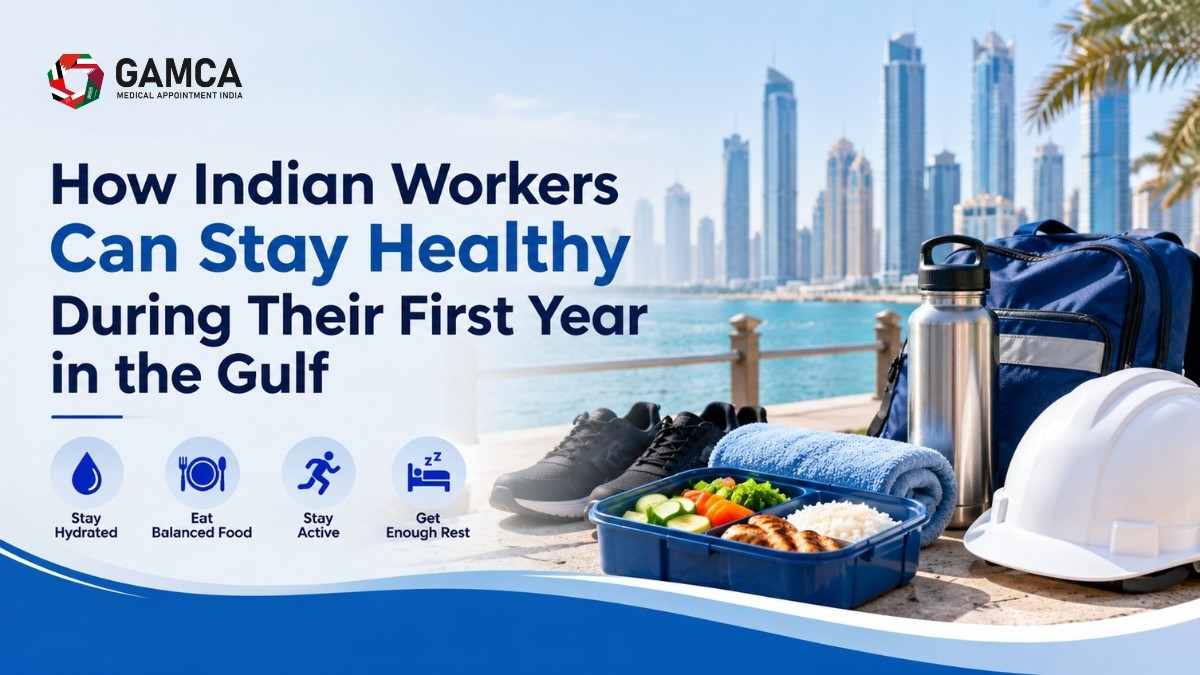
1. The On-Site Reality: Surviving the 50°C Shift
Most workers from northern or southern India assume they already know heat. Gulf heat is fundamentally different: dry desert furnace winds in Riyadh or Kuwait that evaporate sweat instantly before you feel it, or suffocating coastal humidity in Dubai and Dammam where sweat cannot evaporate at all.
The Hydration Rule That Prevents Kidney Stones
When you sweat in hyper-arid conditions, you lose fluid through your breath and skin without noticing damp clothes. If you only drink pure water, your kidneys dump water because your bloodstream lacks sodium and potassium. Within three months, workers end up with agonizing kidney stones or muscle lockups.
- The Daily Formula: Drink 1 glass (250 ml) every 20 to 30 minutes, not 2 liters in one sitting.
- The Camp Prep: Mix one packet of WHO-standard ORS or a pinch of salt and half a lime into your 2-liter site thermos every single morning before the transport bus leaves.
- The “Clear Urine” Metric: Check your urine color before morning shift and after lunch. Pale straw yellow means safe; dark iced-tea brown means your kidneys are taking damage.
Respecting the Midday Work Ban
Every GCC nation enforces statutory summer work bans (generally between 12:00 PM and 3:30 PM from June to mid-September). If your site operates outdoors during these hours, move to designated shaded cooling sheds. Ignoring early warning signs—like goosebumps in 45°C heat, sudden cessation of sweating, or confusion—signals that your internal cooling system has failed. Understanding heat stress risks for Indian workers will help you recognize the fine line between standard exhaustion and a medical emergency that can halt your ability to work.
2. Camp Life Hygiene: Food, Shared Air, and Sleep
Your work shift is only half the battle. What happens inside the labor camp accommodation determines whether your immune system holds up over 12 months.
The Camp Mess & Cooking Traps
Camp life often leads to irregular eating habits. After a 10-hour shift, cooking a proper meal feels exhausting, leading many to rely on cheap fried snacks, leftover rice, or shared mess food made with excess low-grade palm oil.
- Refrigeration Discipline: Bacteria multiply at double speed in warm camp kitchens. Never leave cooked lentils (dal) or meat curries at room temperature for more than 90 minutes.
- The Protein Deficit: Carbs (rice and flatbread) give quick energy, but your muscles need protein to repair structural strain. Add boiled eggs, roasted chickpeas (chana), curd, or local canned tuna to your daily diet to prevent constant muscle fatigue.
AC Thermal Shock and Camp Cough
Stepping out of an 18°C air-conditioned dorm straight into 46°C morning air strains your respiratory lining, triggering chronic throat irritation and seasonal viral infections.
Keep room AC set between 23°C and 25°C.
Wash your bedsheets every weekend; camp mattress dust mites and sand particles trap allergens that cause morning chest tightness.
3. The 3-Tier Gulf Health Check: Know the Difference
One of the biggest anxieties for Indian workers is the constant cycle of medical tests. Here is how your health checks break down across your first year:
Phase | What It Checks | What Is at Stake | Critical Action Required |
|---|---|---|---|
Pre-Departure (India) | TB scars (Chest X-ray), HIV, Hepatitis B/C, VDRL, basic organ function. | Visa issuance & travel clearance. | Ensure clear medical records and no active infections before testing. |
Post-Arrival (Iqama Test) | Infectious diseases, chest repeat, blood screening inside host GCC country. | Issuance of your Civil ID / Iqama work permit. | Avoid over-the-counter self-medication that can skew liver enzyme markers. |
1st Year Renewal | Annual employer checkup or insurance renewal screening. | Contract continuation & legal residence extension. | Manage hypertension and diabetes via company clinics early. |
To clear that essential first hurdle without unexpected administrative delays or center fraud, you must get your pre-departure slip processed through official channels. Make sure you Book Your GAMCA Medical Appointment only through verified systems to ensure your medical fitness data syncs directly with the Gulf Health Council portal.
4. Protecting Your Legal Status: How to Use Company Health Insurance
Too many Indian workers fear visiting the doctor because they worry about medical bills or believe the company will fire them for being sick.
- Get Your Insurance Card in Week One: Do not wait until you have a high fever. Ask your PRO (Mandoob) or HR for your physical or digital health insurance card within your first 14 days.
- Never Conceal Symptoms at the Workplace Clinic: If you injure a muscle, inhale toxic fumes, or feel faint, report to the on-site safety officer immediately. Getting it logged in the site incident register proves the condition was work-related, which guarantees company-paid medical care and prevents unfair salary deductions.
- Carry Home Prescriptions Legally: If you take ongoing medications (e.g., for blood pressure or thyroid), always carry the original doctor’s prescription and stamped cash bill from India. Certain common Indian painkillers, cough syrups, and sedatives contain compounds strictly controlled or banned in the Gulf.
Follow GAMCA India updates for the latest news about GCC medical appointments and test.
Frequently Asked Questions
No. Standard viral fevers, seasonal colds, and throat infections do not disqualify you from your residence permit. Host country health authorities only test for statutory disqualifiers like active tuberculosis, untreated Hepatitis, HIV, or severe communicable diseases. If you feel sick on the day of your post-arrival test, drink fluids, rest, and ask your supervisor to reschedule by a day or two so your temperature normalizes.
GCC labor regulations strictly penalize companies that fail to provide potable drinking water, electrolyte salts, and shaded rest stations during high heat. Inform your site safety engineer or trade union representative. For a detailed breakdown of what your employer is legally mandated to provide regarding safety equipment and preventive care, consult our overview of occupational health for first-time Gulf workers.
In most basic worker insurance policies (such as essential tiers in Dubai or Saudi Arabia), routine dental cleanings and optical glasses are excluded unless related to an acute accidental injury sustained on duty. If you wear glasses, always carry two spare pairs from India, along with an updated vision prescription, to avoid steep replacement costs abroad.